Mobile CRM Dashboard
A mobile-first redesign of a CRM platform for a HealthTech SaaS company. Role: Senior Product Designer · Product, Engineering · Mobile UX & Design Systems
Client
Healthcare SaaS Platform
Industry
Senior Care Technology
Service
UI/UX Design
Design Systems
Interaction Design
Mobile UX & Design Systems
Duration
6 months
The problem
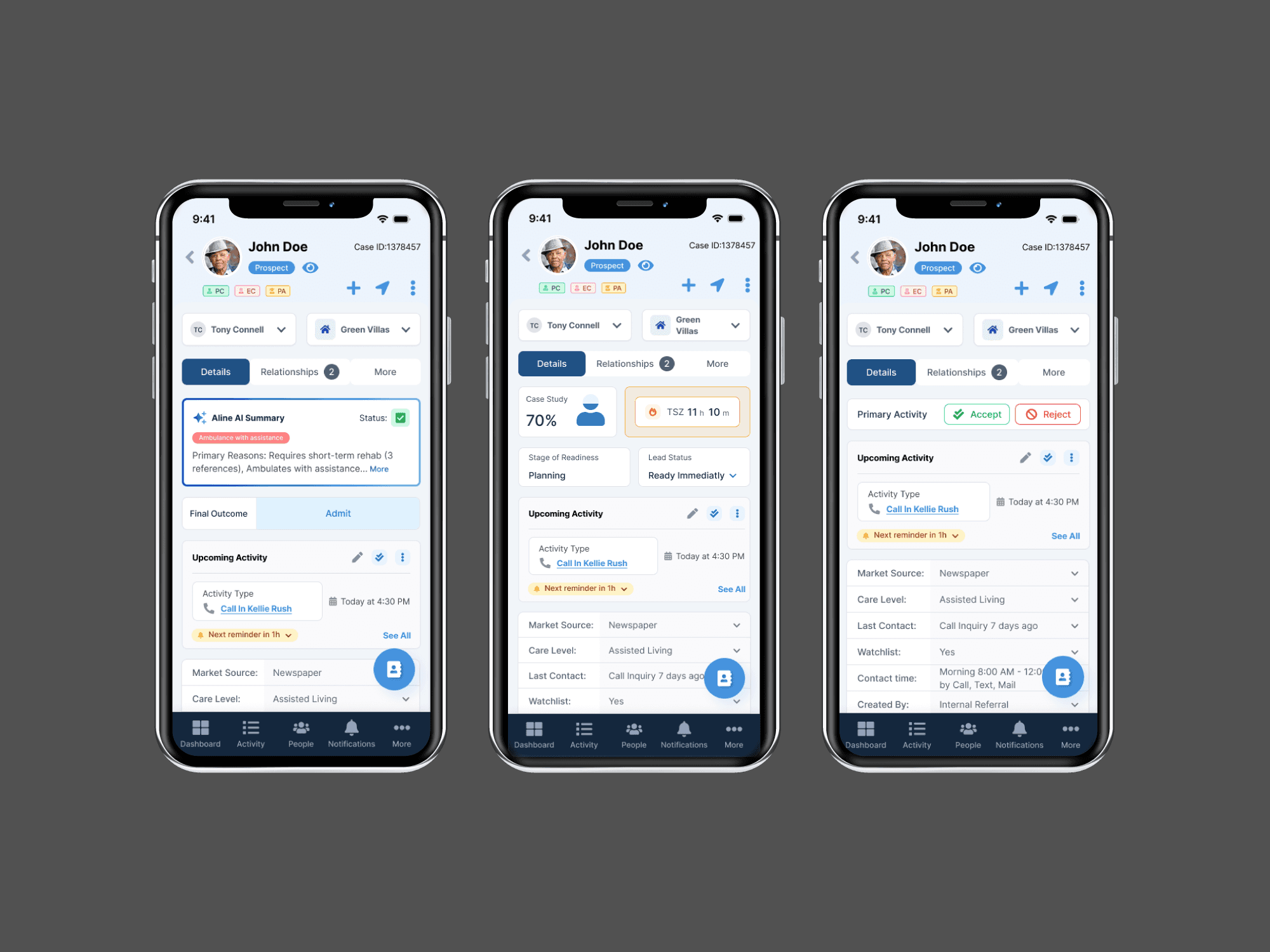
This Dashboard CRM was built around a desktop-first experience. Field staff - sales counselors, care coordinators, and admissions teams - were expected to manage leads, log activities, and monitor occupancy goals via a browser-based dashboard that was never designed for mobile use. The result was a significant productivity gap: users in the field had to either wait until they returned to a desk or work around an interface that wasn't built for how they actually worked. The core issue was speed. Every extra tap, every slow-loading screen, and every piece of irrelevant information increased the delay between a new lead entering the system and a staff member taking action. For a business where response time directly affects conversion, that delay had real consequences.
The Challenge
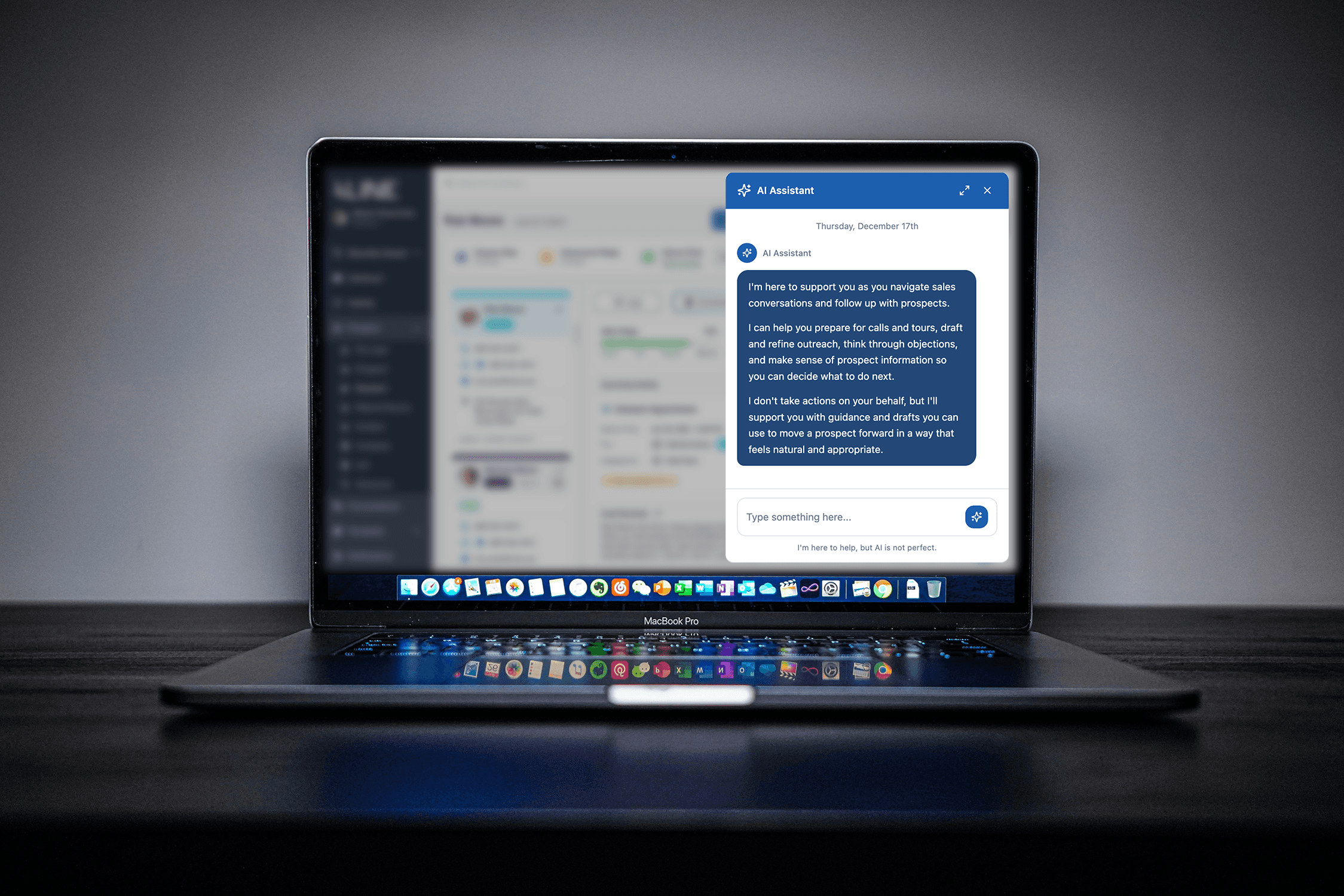
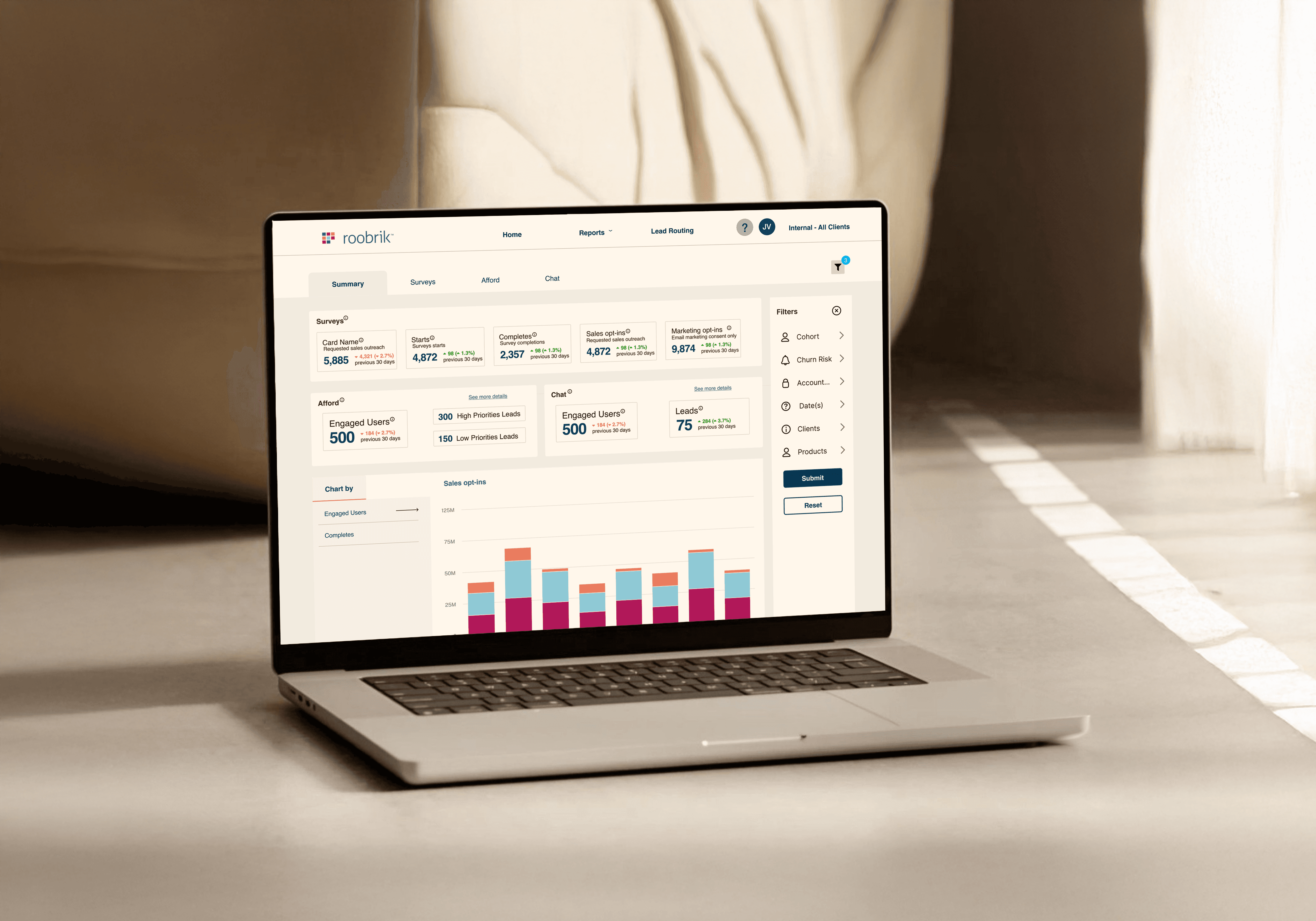
Our biggest design challenge was creating a system that truly felt tailored to each type of care, yet still relied on a shared foundation of components. This dashboard is used by Senior Living sales teams, Skilled Nursing admissions coordinators, and Personal Care Services staff-three groups with very different workflows, priorities, and clinical needs. If we made the system too different for each group, the design would lose cohesion; but if it were too uniform, it wouldn't match the realities of anyone's daily work. To make things even trickier, there was no written brief for the Skilled Nursing dashboard-every requirement was shared verbally during a Teams meeting, so we had to make confident decisions even when things weren't crystal clear. And all along, we were translating complex, data-heavy desktop widgets-like charts, conversion metrics, and AI-generated summaries-into mobile layouts that were easy to read and use with just a tap. That meant we were always focused on what really mattered to each user, making tough choices about what to include and what to leave out.
The Solution
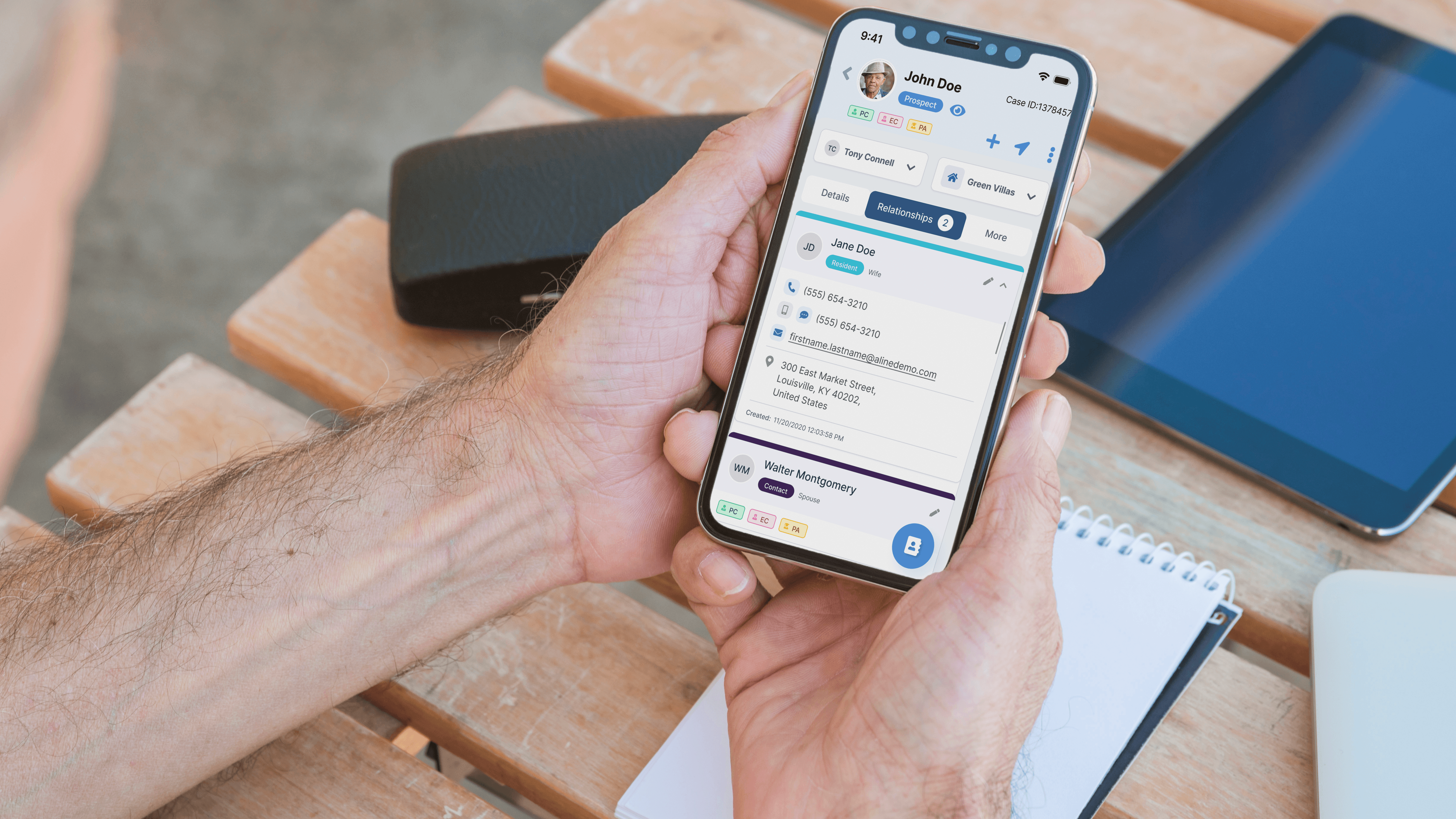
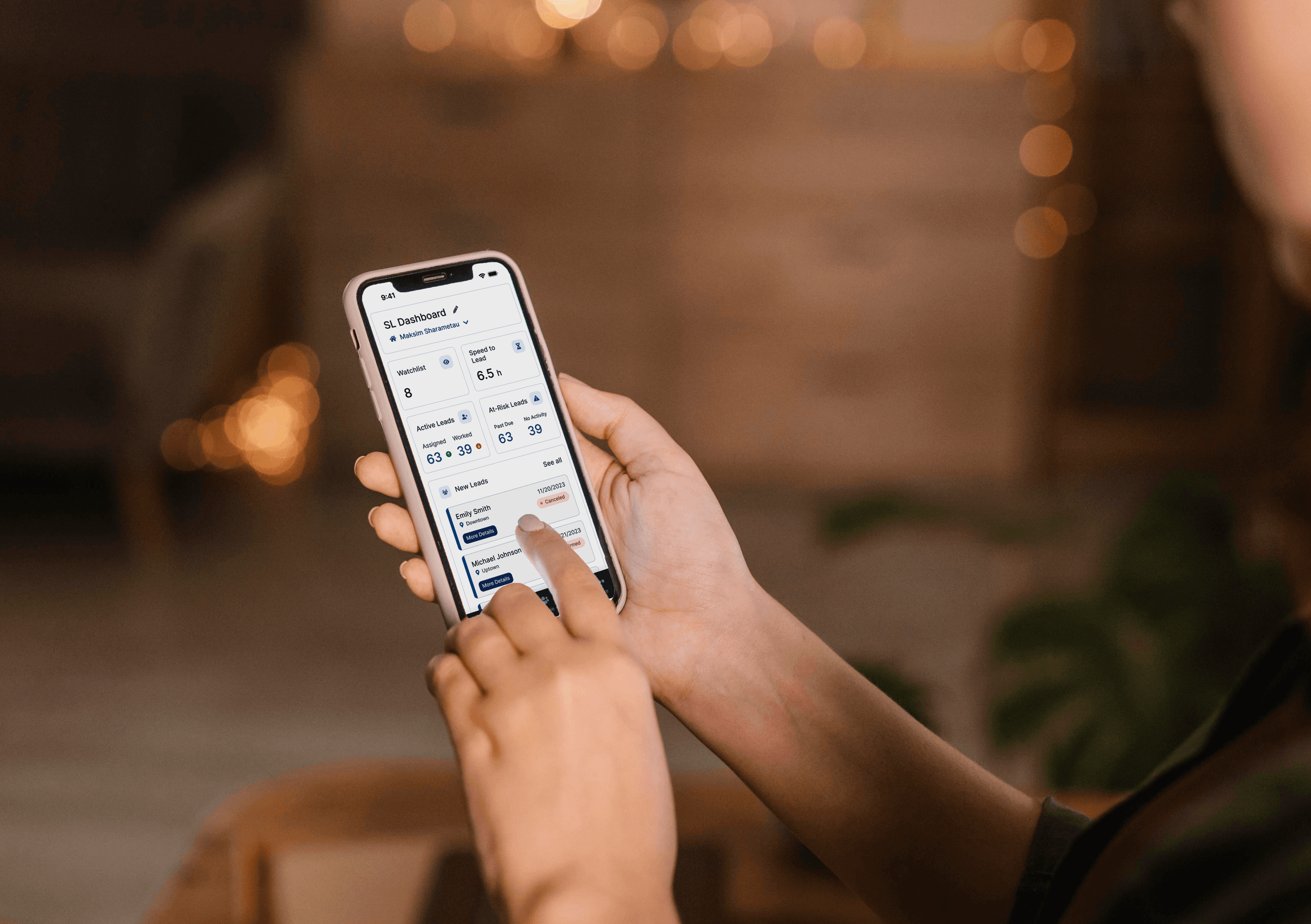
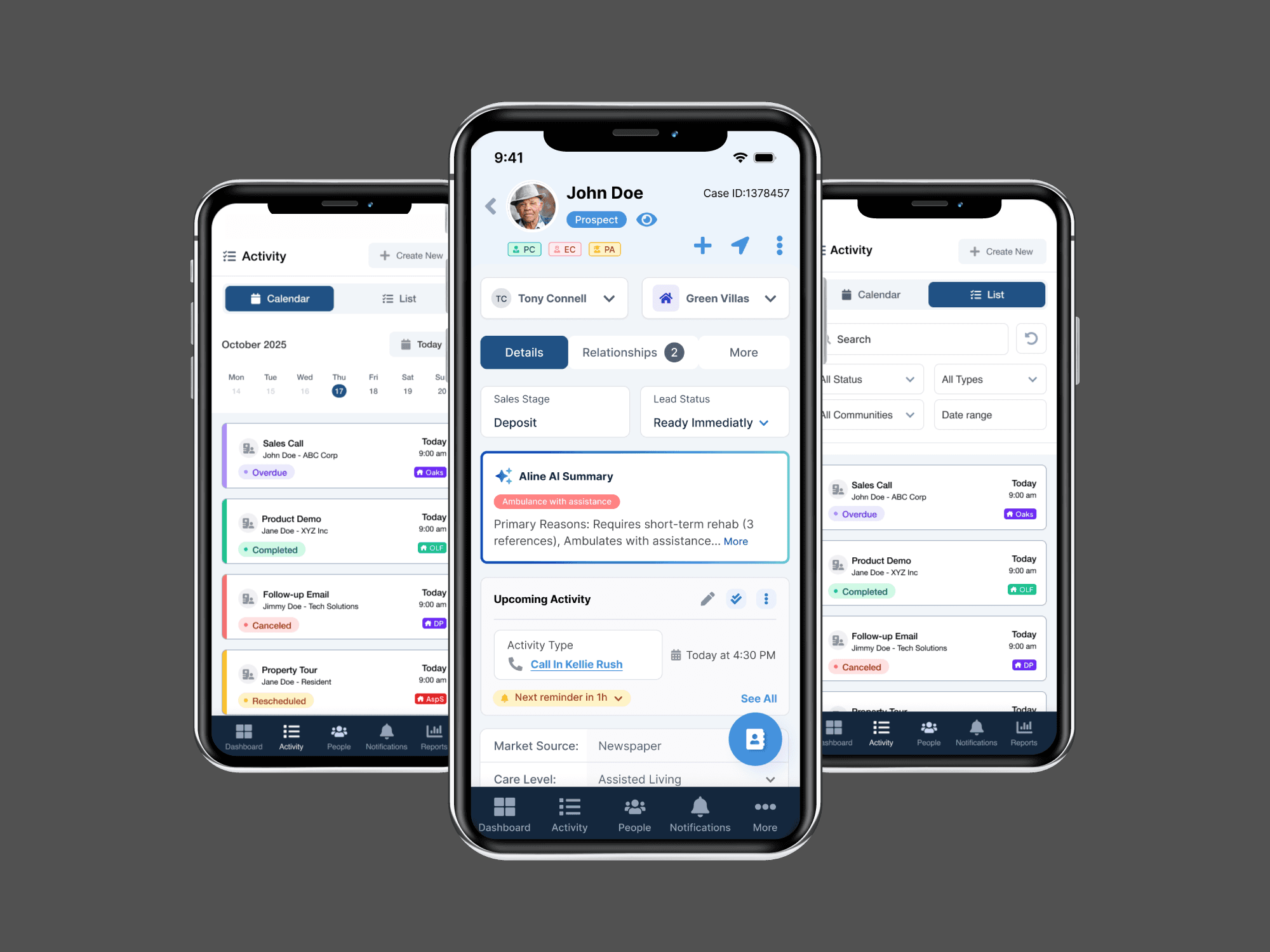
We redesigned the app to give users a widget-driven, action-focused mobile experience across three dashboards: Senior Living, Skilled Nursing, and Personal Care Services. Each dashboard had KPIs tailored to what mattered most to its users, but they all shared a unified design system. Instead of creating three totally separate products, we kept things consistent with layout, navigation, and interactions, while making sure the data for each care type was flexible and relevant. Some of the biggest improvements were a new card-based dashboard that made key metrics easy to spot at a glance, a Calendar/List view that let people quickly log calls, schedule tasks, or send emails, a redesigned People section with easy-to-navigate profile tabs, and a Notification center with simple read/unread states and a handy Dismiss All button. On the SNF dashboard, we added an AI-powered clinical summary, care program tags, and clear Referral Outcome actions, making it a better fit for the fast-paced, high-stakes admissions process. All together, these changes made the mobile experience feel smoother, helped people act faster, and worked seamlessly across all three care types.
The Result
This project delivered the platform's first unified mobile design system, built to serve field teams across Senior Living, Skilled Nursing, and Personal Care Services workflows. Designed for a CRM platform used by thousands of senior care communities across the US, the new experience gave sales counselors, care coordinators, and admissions staff a mobile-first tool that finally matched how they actually worked: fast, focused, and built around the decisions that drive move-ins. The shared component foundation also made it significantly easier to scale into new care types without redesigning from scratch.